
By Ellis Farrow | World | November 14, 2026
MANILA, Philippines — The 49th ASEAN Summit and related meetings are getting under way in Manila this weekend, bringing regional leaders and diplomats together for an ambitious agenda involving cooperation, security and the extraordinary administrative achievement of getting everyone into the correct room.
Under the Philippines’ 2026 chairship, this year’s gathering is organized around the theme ‘Navigating Our Future, Together.’ It is a worthy objective, although navigating the hotel conference floor may offer a useful preliminary exercise.
Multilateral summits are among the few workplaces where a misplaced nameplate can become a matter of genuine international concern.
Every meeting involves careful protocol: flags, delegation signs, microphones, translation equipment and a seating arrangement that must account for diplomatic custom rather than whichever chair happens to be nearest the coffee.
The official agenda stretches across multiple days and includes discussions involving regional cooperation and outside partners.
These are serious subjects requiring collaboration among governments with different interests and perspectives. The comedy comes from the enormous amount of preparation necessary before any of those perspectives can be expressed through a functioning microphone.
Anyone who has attended a long business meeting will recognize the underlying structure: a carefully prepared agenda, opening remarks, a presentation and the realization that one essential decision has been deferred to the next session.
At an international summit, however, postponing an item has greater consequences than rescheduling a budget review. It may require a revised communiqué, a new round of consultations and an additional translation into several languages.
The organization also has ceremonial moments, including the unveiling of an updated ASEAN emblem and flag, alongside ministerial meetings and formal diplomatic events.
Behind the photographs and handshakes sits a remarkable amount of logistical coordination. Travel schedules, security arrangements and dozens of simultaneous discussions have to come together without anyone accidentally wandering into the wrong bilateral meeting.
Back home, ordinary employees can decline a calendar invitation. Diplomats have considerably fewer opportunities to reply that they are busy and suggest the following Tuesday.
Even a group photograph is a test of regional coordination. Leaders must line up, face forward and appear relaxed while cameras capture the precise moment someone realizes a jacket button is crooked.
The real test of a summit, of course, is whether the discussions advance cooperation long after the dignitaries have departed.
Still, the first victory deserves recognition: successfully assembling enough people, interpreters and working microphones to begin the conversation.
If the summit concludes with agreement on the next summit’s agenda, one longstanding tradition of international diplomacy will remain secure.
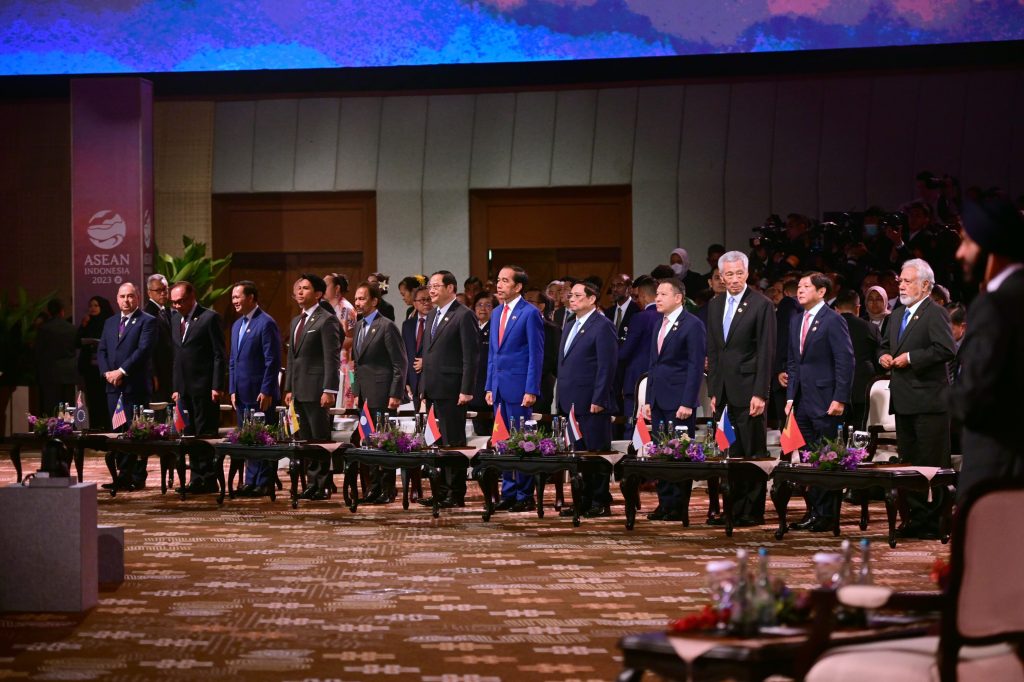
Photo: Archival photograph from the 2023 ASEAN Summit in Jakarta: Government of Indonesia / Wikimedia Commons, public domain in Indonesia. Not the 2026 Manila summit.
About the writer

Ellis Farrow covers world affairs, international summits and diplomatic developments for The Tea Bag Times™. Meet our newsroom.
Keep Reading




Leave a Reply