
By Ellis Farrow | World | Top Story | November 14, 2026
WORLD DESK | WASHINGTON, Nov. 14 — President Donald Trump is expected to meet Russian President Vladimir Putin and Chinese President Xi Jinping in Shenzhen next Thursday, in what is already shaping up to be one of the world’s most closely watched gatherings of powerful men attempting to agree on what the meeting is actually about.
The White House says Trump intends to raise reducing nuclear weapons at the planned three-way meeting, which is expected on the sidelines of an Asia-Pacific Economic Cooperation gathering in China.
Reuters reports that China has resisted including its nuclear arsenal in talks with Washington and Moscow, and a U.S. official has cautioned against expecting an agreement at this initial encounter.
These are serious questions involving international security. They are also an ambitious assignment for any meeting that will require three countries to agree on a speaking order.
The agenda is already negotiating with itself
According to the White House account described by Reuters, the conversation could also touch on the war involving Iran. The U.S. side does not expect discussion of Russia’s war in Ukraine at this particular session.
That leaves an agenda with major global consequences, competing national interests and probably enough briefing materials to require a dedicated luggage allowance.
The United States, Russia and China bring different objectives to the table. Each also brings teams of advisers, translators, security officials and people whose professional lives depend on knowing precisely when to interrupt someone without technically interrupting.
In ordinary workplaces, disagreements about meeting priorities lead to a follow-up email. In diplomacy, they may produce a new negotiating framework, an extended communiqué or six weeks of discussion over whether a comma implies a concession.
Three leaders, countless interpretations
Attention is likely to focus on any public remarks, official readouts and signals about whether further talks are possible. A handshake may be interpreted as progress; a carefully worded statement may be analyzed for days; a photograph can travel around the world before the participants have left the room.
The actual stakes are not a punchline. Nuclear arms control, regional conflict and the future of relations among major powers deserve careful attention.
The bureaucracy around those stakes, however, remains unmistakably human: somebody must still distribute the agenda, keep the microphones working and make sure the right person receives the right translation headset.
The hardest outcome to predict
If the gathering goes ahead as planned, analysts will look for any concrete commitment or follow-up process. Nothing about a high-profile meeting guarantees a breakthrough, and even agreeing to keep talking can carry significance.
In the meantime, the rest of the world is left waiting for an outcome that can be described without twelve paragraphs of diplomatic qualifications.
Whatever happens in Shenzhen, one thing is certain: the official meeting summary will be shorter than the argument about what it means.
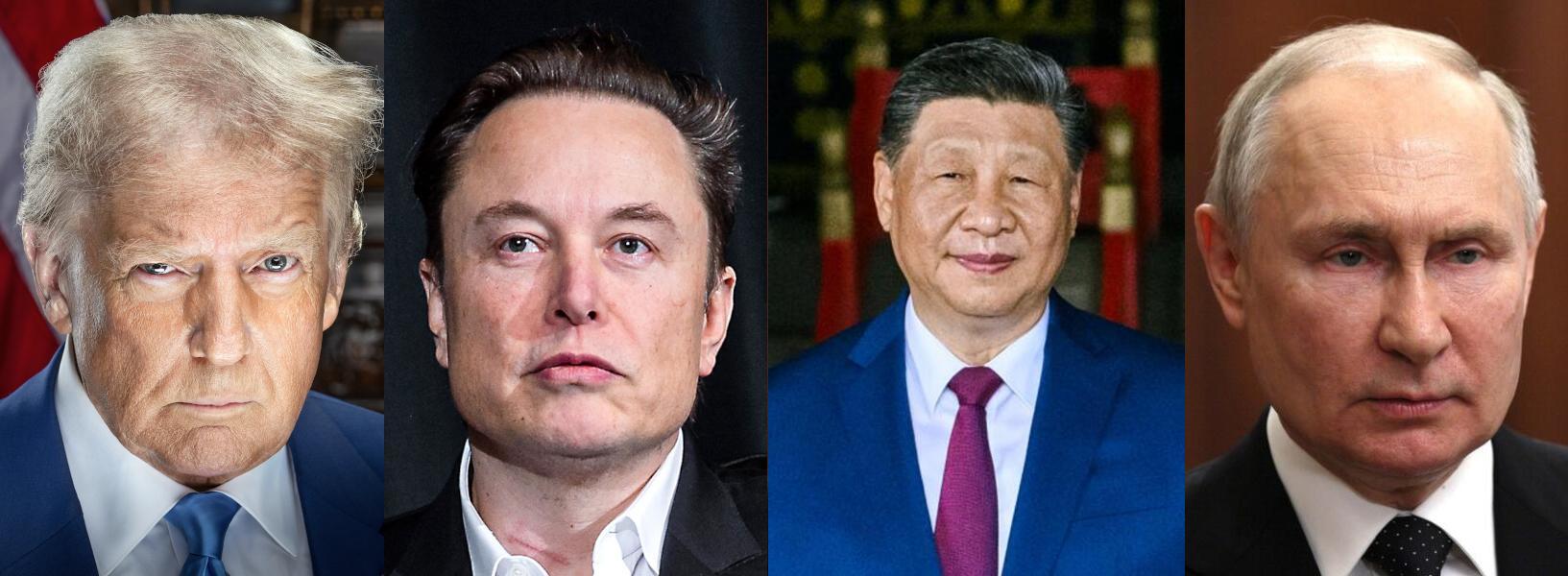
Photo: Archival portraits assembled by Ghostwalk333 / Wikimedia Commons (CC0). Cropped and presented as a three-person editorial montage; not a photograph of an actual meeting or planned summit. Featured archival photograph (2019 G20 Osaka summit, not the proposed 2026 meeting): Alan Santos / PR, Wikimedia Commons (CC BY 2.0).
Reporting background: Reuters, November 14, 2026, on the planned three-way meeting and its agenda. The meeting has not yet occurred.
About the writer

Ellis Farrow covers world affairs, international summits and diplomatic developments for The Tea Bag Times™. Meet our newsroom.
Keep Reading




Leave a Reply