
By Arden Byte | Technology Correspondent
SANTA CLARA, Calif. — Nvidia, the company whose chips help power the artificial intelligence revolution, is preparing for an earnings call in which investors may discover that the most complicated question in technology has nothing to do with technology.
It is, instead: What exactly happens now?
Co-founder Jensen Huang resigned as Nvidia’s president, chief executive officer and a member of its board, the company announced November 12. Chief Financial Officer Colette Kress has taken over as interim CEO while the board searches for a permanent replacement.
The transition arrives just ahead of Nvidia’s scheduled November 17 quarterly earnings announcement, leaving Wall Street with an unusually crowded agenda and approximately no interest in starting with the usual slideshow.
The Numbers Are Still Numbers
Ordinarily, an Nvidia earnings call offers investors a chance to ask how many chips the company sold, how quickly demand is growing and whether artificial intelligence will soon require its own national power grid.
This time, the list of potential questions has grown to include several topics that cannot be solved by adding more GPUs.
Among them: Who will lead Nvidia next? How will the company maintain its momentum? And is there a particular slide in the earnings presentation that explains the entire leadership transition in fewer than 40 bullet points?
Nvidia has said its operations, customer commitments and product roadmap should continue without interruption. That is a reassuring message, although it may not prevent investors from asking the same question again with slightly more dramatic wording.
Interim Is Doing a Lot of Work
Kress, who has served as Nvidia’s CFO since 2013, will continue in that role while also serving as interim CEO. In ordinary workplace terms, one employee has been handed two extremely demanding job titles and a calendar that was already full.
The board has appointed Harvey Jones as its first chair and begun searching for a permanent chief executive. For a company famous for accelerating complex computations, the process remains stubbornly dependent on people discussing other people in rooms.
There is a certain irony in watching the center of the AI economy confront a problem familiar to every office: a suddenly vacant leadership position, an unusually important meeting on the schedule and someone who has to explain who is responsible for what.
Technology may be transforming the world, but succession planning still appears to involve a committee and a great many calendar invitations.
An Earnings Call With an Asterisk
None of this means Nvidia’s chips have stopped working. Graphics processors have not collectively resigned, data centers have not requested an exit interview, and no major AI model has publicly asked for a severance package.
The company’s actual financial results will still matter. Investors will still examine revenue, forecasts, margins and the pace of AI spending. But this week those numbers must share the spotlight with the question of who will lead the business that produces them.
It is possible that Tuesday’s presentation will provide every answer investors want. It is equally possible that the earnings discussion will begin with a long, respectful acknowledgment that everyone has already read the other news.
At press time, Nvidia had not announced a permanent successor. The spreadsheets, however, were reportedly ready.
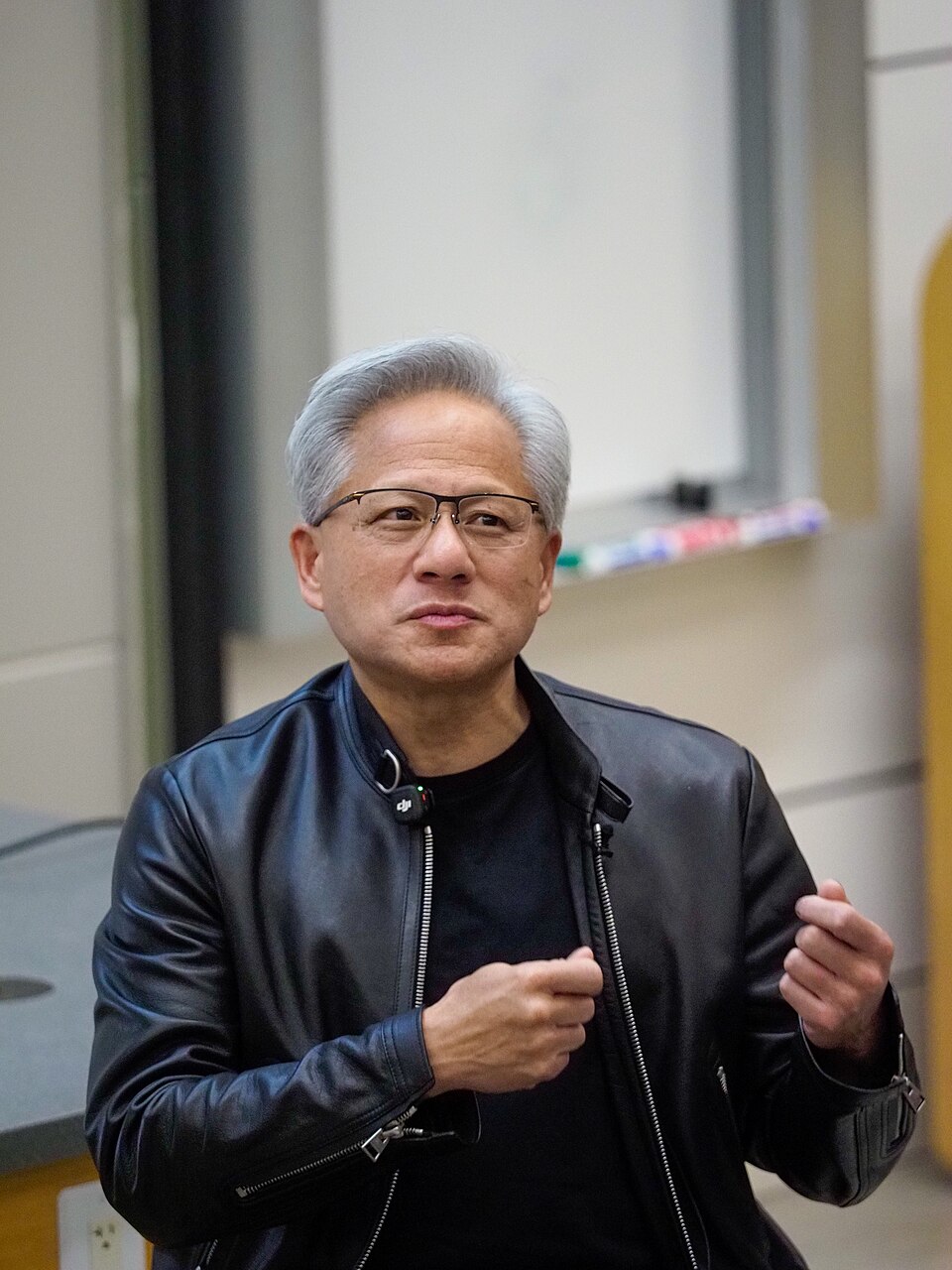
Reporting basis: Nvidia’s November 12, 2026 announcement and its SEC Form 8-K. Editorial jokes and hypothetical investor questions are satire, not company statements. Photo: Anders Eidesvik / Wikimedia Commons, CC BY 4.0, April 2026 archival photograph; no alterations beyond resizing.
About the writer

Arden Byte is The Tea Bag Times™ technology correspondent, exploring new technology and the old problems it promises to solve. Meet our newsroom.
Keep Reading




Leave a Reply