Author: The Tea Bag Times

  • Trump Says He’d Easily Beat Obama in Election Neither Man Is Legally Allowed to Enter

    Trump Says He’d Easily Beat Obama in Election Neither Man Is Legally Allowed to Enter

    President confidently predicts victory in a hypothetical showdown. The Constitution has already ruled out both candidates.

    By Vera Quill | Politics | November 13, 2026

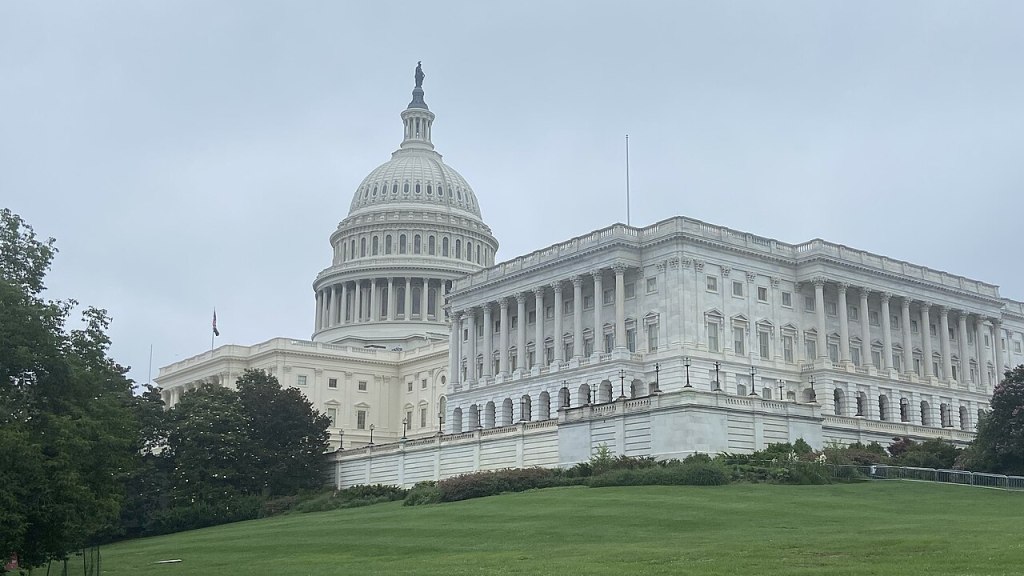
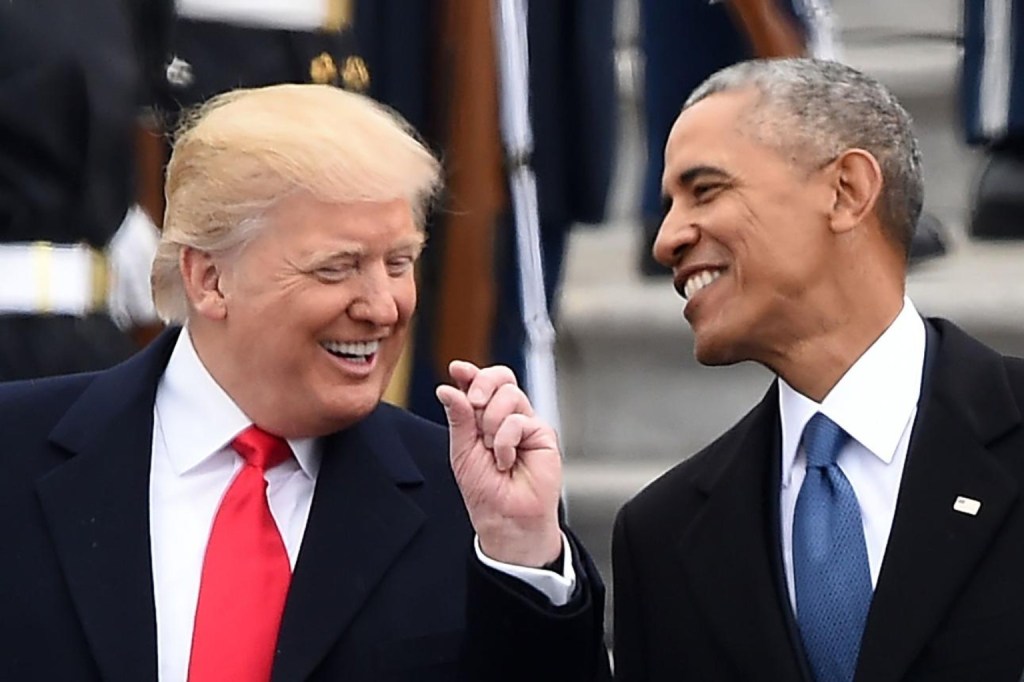
    WASHINGTON — President Donald Trump says he could easily defeat Barack Obama in a presidential election, giving himself an early lead in a race with no ballots, no campaign and two men the Constitution has already ruled out.

    The prediction came during an interview with sports commentator Stephen A. Smith, who asked how Trump would fare against Obama if both were allowed to run again. It was explicitly a hypothetical question, but the president had an answer ready.

    “Yeah. I think I’d beat him easily. Yeah,” Trump said. He also called Obama “highly overrated.”

    Smith seemed taken aback, which is noteworthy for a man who has spent much of his career debating whether retired basketball legends could defeat one another.

    For once, the hypothetical sports argument has an official ruling: neither player is allowed on the court.

    The 22nd Amendment bars anyone from being elected president more than twice. Obama won in 2008 and 2012. Trump won in 2016 and 2024. That means the two candidates in America’s newest imaginary election are both constitutionally ineligible to win it.

    The Constitution, apparently, does not recognize confidence as an exemption.

    Still, the matchup offers a breakthrough for a country exhausted by presidential campaigns: an election Americans can argue about without actually having to endure one.

    There are no debates to watch, no long lines at polling places and no campaign texts warning that democracy will collapse unless someone donates five dollars before midnight.

    Most remarkably, no television network will need twelve analysts standing beside an enormous touchscreen explaining why one county in Pennsylvania has become the center of the universe.

    For once, America can declare a winner in a group chat and go to bed.

    Trump pointed to his previous vote totals and performances in states such as Florida and Texas as evidence he would prevail. The argument effectively uses results from different elections, involving different opponents, to settle the outcome of an election that will never be held.

    It’s the political version of winning a fantasy football championship with players who aren’t on the roster.

    Obama, meanwhile, was not participating in the interview. His role in the matchup consisted of being named in a question, a surprisingly efficient way to become a presidential candidate without hiring a single staffer.

    Naturally, the constitutional obstacle has done little to prevent Americans from doing what they do best: taking firm sides in a dispute that cannot be resolved because it is entirely imaginary.

    Families can now return to the dinner table to discuss which president would win, why the other one never stood a chance and whether Thanksgiving should be canceled over the disagreement.

    The proposed race has no election date, no official candidates and no path to a third elected term without changing the Constitution.

    Trump remains confident. Obama has no campaign to run. And the 22nd Amendment has quietly advanced to the final round.

    It hasn’t held a rally, bought an advertisement or asked anyone for a donation.

    Somehow, it’s the only one guaranteed to win.

    Sources: November 12 interview transcript · U.S. Constitution, 22nd Amendment.


    About the writer

    Portrait of Vera Quill

    Vera Quill covers politics and the White House for The Tea Bag Times™. Meet our newsroom.

  • GTA VI Festival Coming to Miami, Where Residents Have Been Playing on Hard Mode for Years

    GTA VI Festival Coming to Miami, Where Residents Have Been Playing on Hard Mode for Years

    By Reid Frame | Entertainment | November 13, 2026

    MIAMI, Fla. — Rockstar Games has announced that Grand Theft Auto VI: The Festival will take place November 21 at Mana Wynwood, bringing the fictional world of Vice City to the very city that has spent decades providing the franchise with free inspiration.

    The one-day music event, presented with PlayStation, will feature performances from Travis Scott, Cardi B, Metro Boomin, Kodak Black, Justice and other artists associated with the game and its soundtrack. Two stages are planned for the launch celebration.

    For Miami residents, however, the announcement has raised a familiar question.

    Wasn’t this already happening?

    Grand Theft Auto VI takes place in Leonida, a fictional state heavily inspired by Florida, where expensive cars, questionable decisions and unpredictable encounters are part of everyday life.

    South Floridians generally refer to this environment as Tuesday.

    Rockstar has spent years developing a detailed digital recreation of Miami, complete with congested highways, eccentric personalities and individuals whose behavior suggests they have recently discovered that laws are optional.

    Local residents can experience all three on the Palmetto Expressway before 9 a.m.

    Festival organizers have confirmed that no parking will be available on-site, immediately introducing the first major challenge for attendees.

    Those driving to Wynwood will need to locate parking elsewhere, while others are encouraged to use rideshare services.

    For longtime GTA players, this presents an unfamiliar obstacle. In the video game, obtaining a vehicle is relatively straightforward.

    In Miami, locating somewhere to leave it legally requires patience, financial stability and occasional divine intervention.

    The ticketing system has also adopted a surprisingly sophisticated difficulty setting.

    Fans were required to enter a lottery for the opportunity to receive a code granting them the chance to purchase tickets.

    Winning the lottery did not guarantee admission.

    It merely unlocked the next challenge: attempting to give someone money before everyone else did.

    Players accustomed to difficult missions may recognize the frustration, although most video games eventually allow users to restart.

    The festival also carries a minimum age requirement of 17, meaning attendees can participate in an entertainment experience celebrating vehicular chaos but may still be too young to rent a vehicle.

    Given the parking arrangements, this may actually work in their favor.

    The real excitement, however, is expected to begin when the crowds attempt to navigate Wynwood simultaneously.

    Miami’s established population of luxury vehicles, impatient motorists and pedestrians who appear to have made peace with the possibility of death should provide an appropriately immersive atmosphere.

    Visitors unfamiliar with South Florida are advised that honking at another driver is not necessarily an indication of danger.

    It is also a greeting, a complaint, a form of punctuation and, in some neighborhoods, an entire conversation.

    The festival itself promises two stages of live entertainment celebrating Vice City’s music and culture.

    Once inside, attendees will finally have the opportunity to enjoy the fictional world of Grand Theft Auto without worrying about the increasingly expensive consequences of real-world decisions.

    That illusion is expected to last until they attempt to purchase refreshments or arrange transportation home.

    Rockstar has spent years creating what may be the most detailed representation of South Florida ever seen in a video game.

    The company has recreated the beaches, the palm trees, the nightlife and the distinctive personalities that make Miami unlike anywhere else.

    Whether it has successfully captured the experience of someone stopping a luxury SUV in the middle of Biscayne Boulevard to pick up a friend remains to be seen.

    As November 21 approaches, anticipation continues to grow among GTA fans eager to celebrate the franchise’s return to Vice City.

    For Miami residents, the festival represents another opportunity to see their hometown receive international recognition for the colorful atmosphere they have spent years explaining to concerned relatives.

    And when the music finally ends and thousands of people flood the streets of Wynwood in search of their rides, the evening’s most authentic Grand Theft Auto experience will begin.

    Unfortunately, this time, stealing a car is still illegal.

    Photo: Natalie Scott / Unsplash. Archival photograph taken in Wynwood, Miami (2019).

    Event details: Rockstar Games official festival information · Greater Miami event listing.


    About the writer

    Portrait illustration of Reid Frame

    Reid Frame covers entertainment, gaming and pop culture for The Tea Bag Times™. Meet our newsroom.

  • Pokémon Card Fight at Pembroke Pines Target Ends With Handcuffs, Black Eye and Bruised Knee

    Pokémon Card Fight at Pembroke Pines Target Ends With Handcuffs, Black Eye and Bruised Knee

    By Ellis Dusk | U.S. / Unusual Affairs | November 13, 2026

    PEMBROKE PINES, Fla. — What began as an ordinary Thursday afternoon at a Pembroke Pines Target became, briefly, the kind of civic emergency one usually associates with hurricane preparation.

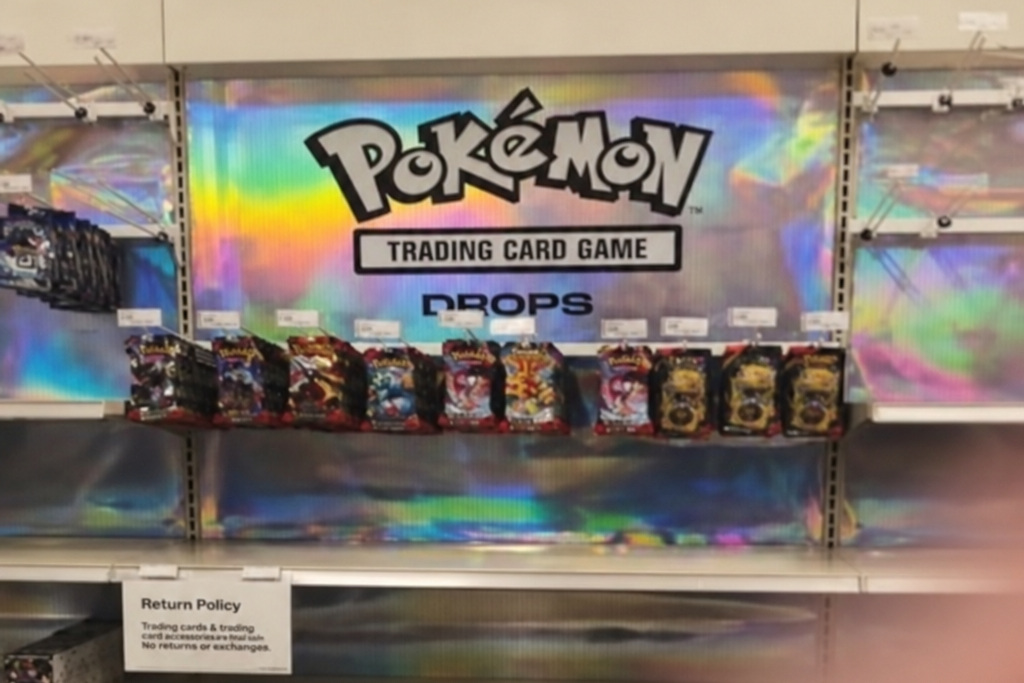
    A disagreement near the trading-card section escalated into a physical confrontation between two customers over Pokémon cards, leaving one man in handcuffs and both with injuries.

    Martin Bellamy, 42, who uses a wheelchair, was arrested following the altercation. Bellamy sustained a black eye, while his opponent, Derek Whitcomb, 36, who was standing during the dispute, emerged with a bruised knee.

    Both men now face the uncomfortable task of explaining injuries that will presumably require a more convincing story than “I was trying to catch them all.”

    What prompted the disagreement remains unclear, although the prospect of obtaining rare Pokémon cards apparently carried enough emotional significance to make a peaceful Thursday afternoon entirely unacceptable.

    Shoppers near the display witnessed what can only be described as an aggressive disagreement over commercially printed cardboard.

    The confrontation began with competing claims over merchandise and escalated after both men appeared unwilling to surrender their opportunity to purchase the cards. Neither participant seemed particularly interested in the radical alternative of simply returning another day.

    Target employees, meanwhile, found themselves overseeing what was likely the most entertaining development of their entire shift.

    After hours of restocking shelves, folding clothes and directing customers toward merchandise located directly behind them, a spontaneous Pokémon-related altercation offered a welcome departure from the usual retail routine.

    The excitement was unfortunately interrupted by the arrival of law enforcement.

    Bellamy was subsequently placed in handcuffs, leaving him with a black eye and considerably more paperwork than he had anticipated when entering the store.

    Whitcomb, meanwhile, was left nursing his bruised knee and the realization that attempting to acquire Pokémon cards had somehow resulted in an actual physical injury.

    The incident raises questions about the increasingly competitive trading-card market, where limited inventory and inflated resale prices have apparently convinced otherwise reasonable adults that securing a holographic cartoon creature is worth a confrontation with law enforcement.

    Finding the appropriate corporate language to address two adults fighting over Pikachu merchandise would undoubtedly present its own challenges.

    Normal shopping activities resumed following the disturbance. As for the Pokémon cards that sparked the confrontation, their whereabouts remain unknown.

    Neither man’s injuries are expected to increase the resale value of the merchandise.

    The cards, as always, were already gone.


    About the writer

    Digitally created portrait of fictional correspondent Ellis Dusk

    Ellis Dusk covers U.S. and unusual affairs for The Tea Bag Times. Meet our newsroom.

  • I Bought the Product. Why Am I Still Paying Rent on It?

    I Bought the Product. Why Am I Still Paying Rent on It?

    By Reid Frame | Opinion | November 12, 2026

    There was a time when buying something meant a fairly straightforward exchange: you handed over money, received the thing and then, in a remarkable display of economic restraint, nobody charged you again next month.

    Businesses have since identified this arrangement as a serious missed opportunity.

    Today, a person can subscribe to entertainment, software, cloud storage, meal kits, fitness plans, home security features and a remarkable number of services that promise to help manage all the other subscriptions. Ownership has become a temporary condition subject to renewal.

    Consider television. We were told streaming would free us from expensive cable bundles, endless channels and the indignity of paying for programming we did not watch. In response, the industry created a collection of separate streaming services that, when combined, offer an impressively accurate reenactment of the cable bill.

    To watch one show, you need one app. To watch its spinoff, you need another. To watch the movie everyone at work is discussing, you must first discover which corporation currently owns the right to let you see it. By the time you locate the film, it has moved to a different platform.

    The subscriptions are not content merely to exist. They come in tiers. There is a basic tier, a premium tier and an especially premium tier that allows you to experience the product without being interrupted by advertisements for the product you are already paying to use.

    Removing commercials, once the chief attraction of paying for streaming, has been repackaged as an optional luxury. Congratulations: the future has invented paying extra for silence.

    Software has followed the same path. An application that once arrived in a box with a license you could keep now wants an ongoing relationship. It promises automatic updates, seamless syncing and the opportunity to fund its continued existence every 30 days. The software is no longer a tool. It is a small, demanding tenant living in your computer.

    Then there are the free trials. Their central innovation is the belief that a customer who forgets to cancel has demonstrated meaningful enthusiasm. The product may have been used once, for six minutes, but the recurring charge remains optimistic about the future of the relationship.

    Cancellation is a separate art form. Joining can take one tap. Leaving may require finding a settings menu, navigating three retention offers, confirming that you understand the benefits you will lose and answering a final question about whether you are absolutely certain you wish to stop paying money.

    Yes. That is what the first five clicks were meant to convey.

    None of this means subscriptions are inherently bad. Paying regularly for a service that provides ongoing value can make sense. The problem is the growing corporate conviction that every product should become a permanent financial commitment, even when the customer’s original ambition was simply to buy something and move on with life.

    The real measure of progress should not be how many things a company can bill monthly. It should be whether the product makes the customer’s life better after the initial purchase.

    Until then, I have decided to simplify my finances. I am canceling anything I do not need, reviewing my bank statements and setting aside time each month to manage the services that were supposed to save me time.

    I would make it a recurring calendar event, but I suspect the calendar app will charge me.

    Photo: freestocks / Unsplash. Real illustrative photograph (2018).


    About the writer

    Portrait illustration of Reid Frame

    Reid Frame writes for The Tea Bag Times. Meet our newsroom.

  • The Tip Screen Has Started Asking for Money Before Anyone Does Anything

    The Tip Screen Has Started Asking for Money Before Anyone Does Anything

    By Penny Marsh | Opinion | November 12, 2026

    The modern American transaction has a new final step. After you select your purchase, confirm the total and prepare to leave, a small screen turns toward you and asks whether you would like to contribute another 20 percent to the experience of having purchased something.

    Sometimes a person has made you a drink. Sometimes a person has handed you a bag. Sometimes you have located the item, carried it to the counter, scanned it yourself and done most of the work short of balancing the register at closing time. The screen is not interested in these distinctions.

    It simply offers 18 percent, 20 percent and 25 percent, with the confidence of an institution that has never experienced embarrassment.

    To be clear, tipping workers who actually provide service is not the problem. Servers, bartenders and other service workers depend on gratuities in many establishments, and customers should not punish them for a system they did not design. The problem is that businesses have discovered a convenient way to turn the checkout counter into a referendum on the customer’s character.

    Consider the choreography. You order a coffee. The cashier rotates a tablet toward you. The machine presents several generous percentages in large, welcoming type. The option to leave no tip is available, often in a smaller font, somewhere near the digital equivalent of a fire exit.

    You are now expected to make a financial decision under the observation of the employee, the people behind you and a screen that appears disappointed in your upbringing.

    The extraordinary thing is how little service must occur before this ceremony begins. The tip is sometimes requested before the drink exists. The employee has not yet made it. The customer has not yet tasted it. Nevertheless, the transaction has reached the stage where gratitude is being collected in advance, like a security deposit on politeness.

    Employers benefit from this arrangement. Instead of paying workers enough and incorporating labor costs into prices, some businesses can invite customers to solve the compensation question one awkward tap at a time. A $7 sandwich becomes a small group project in wage policy.

    And then there is the percentage itself. If the price of the sandwich goes up, the requested tip rises automatically, even if the act of handing over the sandwich has not become more technically demanding. Inflation now apparently applies to the motion of moving a paper bag eighteen inches across a counter.

    Customers have begun to develop survival strategies. Some study the screen as though deciphering an international treaty. Others press ‘custom amount’ with the furtive concentration of someone disabling a security alarm. A few have mastered the art of selecting no tip while maintaining eye contact. These people should be considered for diplomatic service.

    A reasonable society can support good service workers without demanding a moral confession from everyone buying bottled water. Businesses could pay transparent wages. Prices could reflect actual costs. Tips could return to being a gesture of appreciation instead of a mandatory-looking pop quiz.

    Until then, the next time a payment terminal asks whether you would like to add 25 percent, you are entitled to ask a question of your own: For what, exactly?

    Do not ask it aloud. The tablet may be listening.

    Photo: SpotOn / Unsplash. Real illustrative photograph (2026).


    About the writer

    Portrait illustration of Penny Marsh

    Penny Marsh writes for The Tea Bag Times. Meet our newsroom.

  • Washington Prepares for Congressional Investigations; Attorneys Clear Their Calendars

    Washington Prepares for Congressional Investigations; Attorneys Clear Their Calendars

    By Vera Quill | Politics / White House | November 12, 2026

    WASHINGTON, D.C. — Washington is preparing for another round of congressional investigations, a development that promises long hearings, sharply worded letters and a period of unusually robust demand for attorneys who can clear their calendars on short notice.

    With Democrats set to take control of Congress in January, the White House is already challenging the scope of planned oversight inquiries. White House counsel Will Scharf warned in a letter to Rep. Robert Garcia that certain threats or uses of congressional investigative powers could cross legal lines. Democrats dispute that position and say oversight is part of Congress’s constitutional responsibility.

    Neither side has shown much interest in waiting until January to begin the argument. Even before new committee chairs take their seats, the capital’s most reliable product—an official letter expressing serious concern—is moving rapidly.

    The disagreement raises complicated constitutional questions about legislative oversight and executive authority. It also raises a question with fewer legal implications: whether anyone in Washington will be able to receive a subpoena without immediately scheduling three meetings to discuss how to respond to it.

    An investigation is often discussed publicly as a search for answers. In practice, it is also a sustained exercise in requesting documents, preserving records and producing emails that nobody remembers writing.

    One side may announce that it is demanding accountability. The other may announce that the demands themselves require scrutiny. Observers trying to keep track may soon need an organizational chart showing who is investigating whom.

    Amid the disagreement, attorneys are likely to spend considerable time translating ordinary sentences into language that can survive an angry press conference and a court filing.

    For the moment, Washington has reached no consensus on the coming oversight battles. But it has rediscovered a familiar principle: when political conflict intensifies, the calendar fills up before the questions are answered.

    Photo: RobertPlausible / Wikimedia Commons, CC BY 4.0. Archival photograph (2025).

    Related reporting: Associated Press, White House and oversight dispute · Reuters, November 11 letter


    About the writer

    Digitally created portrait of fictional reporter Vera Quill

    Vera Quill covers politics and the White House for The Tea Bag Times. Meet our newsroom.

  • Nvidia Begins CEO Search; World’s Most Advanced Chips Still Cannot Conduct the Interviews

    Nvidia Begins CEO Search; World’s Most Advanced Chips Still Cannot Conduct the Interviews

    By Graham Ledger | Business / Technology | November 12, 2026

    SANTA CLARA, Calif. — Nvidia, a company whose technology helps power some of the world’s most advanced artificial intelligence systems, is now handling a challenge familiar to businesses of every size: finding somebody new to run the place.

    The company announced Thursday that co-founder Jensen Huang had resigned as president, chief executive and a board member. Chief Financial Officer Colette Kress was appointed interim CEO while the board searches for a permanent successor.

    The announcement also produced a useful reminder of the limits of modern computing. Nvidia can help train enormous AI models, accelerate complex calculations and supply hardware used by major technology firms. None of those capabilities eliminates the need for a hiring committee.

    Somewhere inside the company’s recruiting process, people will still have to review résumés, compare leadership styles, schedule interviews and decide whether a candidate who describes themselves as ‘visionary’ can explain what they plan to do before next Tuesday.

    In an ordinary office, an unexpected leadership change might result in a hastily arranged all-staff meeting and a promise that daily operations will continue as normal. At one of the most closely watched companies in the world, the same promises must also reach customers, developers and investors.

    Nvidia said its operations, commitments and product roadmap would continue. The company is preparing to report quarterly results on November 17, adding a deadline that would be difficult to miss even in a much quieter organization.

    Technology companies frequently describe the future as automated. Leadership transitions still tend to involve an exceptionally human combination of judgment, uncertainty and calendar invitations.

    At least the successful candidate will not need to explain what a GPU is. That should shorten the interview process by several minutes.

    Photo: Coolcaesar / Wikimedia Commons, CC BY-SA 4.0. Archival photograph (2018).

    Related reporting: Nvidia, November 12 leadership announcement · Nvidia SEC filing


    About the writer

    Digitally created portrait of fictional reporter Graham Ledger

    Graham Ledger covers business and labor for The Tea Bag Times. Meet our newsroom.

  • Prize-Winning Author Cleared of AI Use; Being Human Proves Surprisingly Hard to Document

    Prize-Winning Author Cleared of AI Use; Being Human Proves Surprisingly Hard to Document

    By Celia Thread | Culture / Books | November 12, 2026

    HARARE, Zimbabwe — Zimbabwean writer Simbarashe Kundizeza has been cleared of allegations that he used artificial intelligence to write his prize-winning short story, an outcome that confirms something that once required considerably less paperwork: a writer wrote a story.

    The Caine Prize for African Writing upheld his award after an investigation that included interviews and analysis of draft metadata. Kundizeza had denied the allegation, which followed a report relying in part on an AI-detection tool.

    The story, ‘The Blue Fighter,’ draws on difficult family and economic experiences. The decision to clear its author should close the specific dispute, though it has opened a larger one about how confidently anyone can identify machine-written prose.

    Until recently, writers were expected to submit a manuscript, revise it and explain why the ending worked. The newer unofficial process may also involve producing drafts, timestamps, notes and evidence that a human being was present during the writing.

    That is an unusual amount of documentation for a profession whose most common workspace is a laptop next to an unfinished cup of coffee.

    AI-detection services can produce false positives. That matters especially when a flawed judgment can damage an author’s reputation. The controversy also generated debate about whether African and Black writers face disproportionate suspicion.

    The Caine Prize announced additional disclosure requirements and plans for an AI-use policy. Institutions may need clear rules, but none of them can avoid the basic difficulty of evaluating original writing in a world where polished language is increasingly treated as suspicious.

    For writers everywhere, the advice remains familiar: keep the drafts. Not necessarily because they improve the finished story, but because one day you may have to prove that you were the one who made the mistakes in the earlier versions.

    Photo: nedimshoots / Unsplash. Illustrative photograph, not the author.

    Related reporting: Associated Press, Caine Prize review · The Guardian, November 12 report


    About the writer

    Digitally created portrait of fictional reporter Celia Thread

    Celia Thread covers culture and family for The Tea Bag Times. Meet our newsroom.

  • AI Companies Sued Over AI Risks, Face Difficult Question of Who Should Draft the Response

    AI Companies Sued Over AI Risks, Face Difficult Question of Who Should Draft the Response

    By Clara Docket | Politics / Public Affairs | November 12, 2026

    SAN FRANCISCO, Calif. — A coalition of advocacy groups sued five major artificial intelligence companies Thursday, seeking a court order that would halt development or deployment of their most advanced models. The lawsuit presents the industry with a serious legal challenge and one unusually awkward administrative question.

    Who, exactly, is supposed to draft the response?

    The complaint, filed in San Francisco Superior Court, targets Anthropic, Google, Meta, OpenAI and SpaceXSI. It argues that frontier AI systems could pose catastrophic risks and that the companies have acknowledged some of those dangers themselves.

    Legal teams responding to such a filing will need to review complex technical claims, discuss company safeguards and meet court deadlines. They will also need to decide whether asking an AI assistant to summarize a lawsuit about AI would be efficient, ironic or a terrible idea to mention in the first paragraph.

    Silicon Valley has spent years promising that these tools can save time on repetitive office work. A lawsuit involving the safety of those same tools complicates the sales pitch somewhat. A slide titled ‘Let the model do the first draft’ may need to be moved to the appendix.

    The central issue is not whether technology can help prepare documents. It is whether development of the most capable systems should continue while courts consider the risks and safeguards. That question is substantial, and the companies are expected to contest the requested restrictions.

    Still, modern office culture has created a familiar contradiction: the more consequential the subject, the more tempting it becomes to ask software to turn a complicated matter into five bullet points.

    Somewhere, a lawyer is almost certainly typing a summary of this case. Whether the first sentence begins with ‘Certainly’ is not yet a matter of public record.

    Photo: Krists Luhaers / Unsplash. Illustrative photograph.

    Related reporting: Reuters, November 12 lawsuit · Associated Press, legal filing coverage


    About the writer

    Digitally created portrait of fictional reporter Clara Docket

    Clara Docket covers public affairs for The Tea Bag Times. Meet our newsroom.

  • Outlook Outage Gives Office Workers an Unexpected Afternoon With Their Own Thoughts

    Outlook Outage Gives Office Workers an Unexpected Afternoon With Their Own Thoughts

    By Arden Byte | Technology / Work | November 12, 2026

    REDMOND, Wash. — A widespread Microsoft service disruption Thursday interrupted Outlook, Teams and other workplace tools, leaving thousands of employees to confront a situation their calendars had never prepared them for: a workday without reliable access to work.

    Outage reports climbed across the United States as users struggled to send emails, open accounts and connect to services. Microsoft said it was working to reduce the impact and restore functionality.

    The disruption arrived in offices where nearly every task depends, directly or indirectly, on receiving a message about another task. Without new emails, some workers were briefly left with no obvious way to demonstrate that they were extremely busy.

    Employees who normally spend the afternoon moving between Outlook and Teams could still perform their jobs in theory. In practice, that required locating files, remembering decisions and occasionally speaking to someone without first sending a calendar invitation.

    Managers may have encountered the most difficult problem of all: how to arrange a meeting to discuss the fact that the meeting platform was not working.

    The familiar troubleshooting ritual continued largely unchanged. People refreshed the screen, closed the application, reopened it, checked the Wi-Fi, and then asked coworkers whether the problem was happening to everyone else. It was, which offered temporary relief but did little to rescue the afternoon.

    At least one productive activity remained available throughout the incident: telling another person, in considerable detail, that the software was down.

    Normal service could return and the missed messages could arrive in a sudden flood. For office workers, this is the final stage of every interruption—the part where the unexpected free time is collected with interest.

    Photo: TECNIC Bioprocess Solutions / Unsplash. Illustrative office photograph.

    Related reporting: Reuters, November 12 Microsoft outage · BleepingComputer, Microsoft 365 disruption


    About the writer

    Digitally created portrait of fictional reporter Arden Byte

    Arden Byte covers technology for The Tea Bag Times. Meet our newsroom.